Mercedes refreshes its flagship sedan for 2026 with new engines, upgraded tech, and subtle design changes that modernize rather than reinvent the S-Class.
A Major Mid-Cycle Overhaul
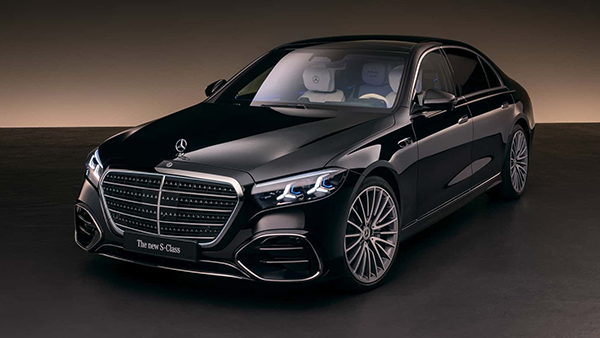
Mercedes describes the 2026 S-Class refresh as the most extensive update applied to a single generation, with more than half the vehicle reportedly revised. Rather than reinventing the car, the update refines the existing formula with mechanical upgrades, expanded digital features, and small but noticeable design tweaks. The result is still unmistakably an S-Class, but one that leans harder into software-driven luxury and performance improvements.
1. Familiar Design With New Details
The silhouette remains classic S-Class: long hood, smooth roofline, and a tall cabin emphasizing rear-seat comfort. But the front and rear receive subtle revisions. A larger grille now features multiple three-pointed star elements embedded within the slats, and the fascia is sharper overall. An illuminated grille and hood ornament are also available, adding nighttime presence without altering the car’s traditional proportions.
At the rear, new taillights echo the design language of the latest E-Class, with star-shaped lighting elements connected by a chrome strip across the trunk. Chrome accents also highlight the dual exhaust outlets, reinforcing the luxury-first presentation rather than pursuing overt sportiness.
2. New Digital Light Headlamp Technology
A major functional upgrade comes from the debut of Mercedes’ new Digital Light system. The headlights use adaptive ultra-range high beams and partial-beam technology that automatically shapes and directs light to maximize visibility without blinding other drivers. Notably, this advanced adaptive lighting technology will be available in the U.S. for the first time in the S-Class, addressing a long-standing regulatory limitation.
3. Superscreen Replaces Hyperscreen Layout
Inside, Mercedes moves away from the previous single-glass Hyperscreen layout and introduces what it now calls the Superscreen. Instead of one continuous display, the cabin uses separate screens for the driver, center controls, and passenger.
The setup includes:
– 12.3-inch digital instrument cluster
– 14.3-inch central touchscreen
– 12.3-inch passenger display
The layout aims to improve usability while still delivering the screen-heavy presentation now expected in flagship luxury sedans.
4. MBUX Goes AI-Powered
The S-Class also launches the fourth-generation MBUX infotainment system, powered by a new central computing architecture Mercedes describes as a “supercomputer.” Artificial intelligence from both Google and Microsoft supports navigation, voice interaction, and vehicle functions.
The MBUX Virtual Assistant now appears as an animated avatar on the interface, including a character Mercedes calls “LittleBenz,” designed to create a more conversational interaction between car and occupants. Native Google Maps integration and built-in apps like YouTube and Disney+ further expand the in-car digital ecosystem.
5. Rear Seats Become A Mobile Lounge
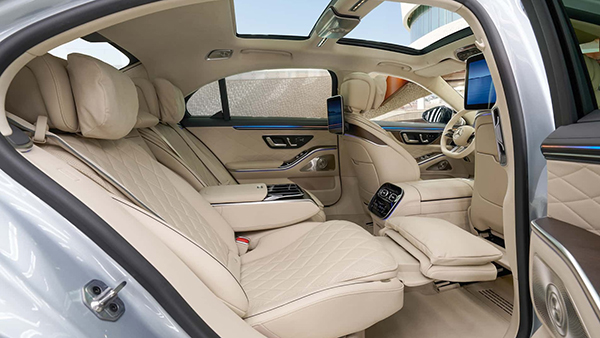
Rear passengers continue to receive special treatment, with two new 13.1-inch screens mounted on the front seatbacks. Mercedes also introduces detachable MBUX remotes that allow passengers to control entertainment, climate, seat adjustments, blinds, and other comfort functions without reaching forward.
The focus remains on making the rear compartment suitable for both relaxation and work, maintaining the S-Class’ long-standing role as a chauffeur-friendly luxury sedan.
6. Heated Surfaces Now Include Seatbelts
Mercedes extends cabin comfort even further by adding heating to nearly every major touchpoint. In addition to heated seats and steering wheel, the system now warms armrests, center console surfaces, and even the seatbelts, an unusual addition intended to improve comfort in cold climates from the moment occupants buckle in.
7. Flat-Plane V8 Headlines Engine Updates
The most surprising mechanical update comes under the hood of the S580, which now uses a new 4.0-liter twin-turbocharged V8 with a flat-plane crankshaft, a configuration typically found in performance sports cars rather than luxury sedans.
Output stands at 530 horsepower, 553 lb-ft of torque.
A mild-hybrid integrated starter-generator contributes an additional 23 horsepower when needed. Mercedes estimates a 0–60 mph time of 3.9 seconds, an impressive figure for a full-size luxury sedan focused primarily on comfort.
8. Updated Inline-Six Powers Entry Model
The S500 receives an updated version of Mercedes’ 3.0-liter inline-six engine producing 442 horsepower and 443 lb-ft of torque. With temporary overtorque function activated, torque rises to 472 lb-ft.
Despite serving as the lineup’s entry point, Mercedes estimates a 0–60 mph time of about 4.3 seconds, keeping performance competitive with many performance-oriented sedans.
9. Plug-In Hybrid Gains More Power
The S580e plug-in hybrid remains in the range and benefits from an upgraded electric motor paired with the inline-six engine, producing a combined 576 horsepower and 553 lb-ft of torque, an increase over the outgoing model.
Mercedes has not yet released updated electric-only range figures, but expectations are that it will exceed the previous model’s 46-mile EPA estimate, improving its usefulness for daily electric commuting.
10. Ride Comfort Still Leads The Segment
Every 2026 S-Class comes standard with Mercedes’ Airmatic air suspension, while the optional E-Active Body Control system adds predictive and intelligent damping.
The system can reportedly detect and differentiate road irregularities, adjusting suspension behavior proactively. Sharp impacts like potholes are handled differently from larger vertical motions such as speed bumps, helping maintain cabin comfort before passengers even feel the disturbance.
2026 Mercedes-Benz S-Class 10 Things To Know
04/02/2026
No Comments
Mercedes-Benz | Mercedes-AMG
Click to rate this post
[Total: 2 Average: 5]
