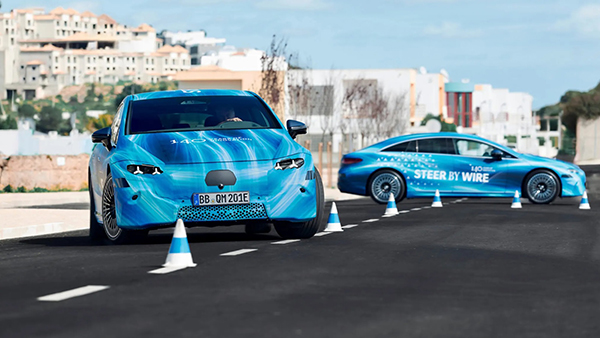
Mercedes-Benz is preparing another major update for the EQS, introducing steer-by-wire technology and a yoke steering wheel in an effort to modernize its flagship electric sedan.
Mercedes Bets on Steer-By-Wire for EQS Revival
The electric flagship from Mercedes-Benz has struggled to resonate with buyers since its debut, prompting the company to rethink the model’s direction. After a rushed facelift in 2024 that introduced a more traditional grille, a hood ornament, and interior tweaks, the company is preparing a second round of changes aimed at improving both the car’s design and technology. The updated model, expected to appear as the 2027 version of the Mercedes-Benz EQS, will introduce a new steer-by-wire system along with a redesigned yoke-style steering wheel.
Steering Without a Column
Steer-by-wire eliminates the traditional mechanical connection between the steering wheel and the front wheels. Instead of a physical shaft transmitting movement, electronic signals direct motors that control the steering gear. The concept isn’t entirely new; early implementations appeared in vehicles like the Infiniti Q50, but those systems retained a backup mechanical column. The EQS will join newer designs such as the Tesla Cybertruck and the Nio ET9 in using a fully digital approach with no physical steering shaft at all.
Built-In Redundancy
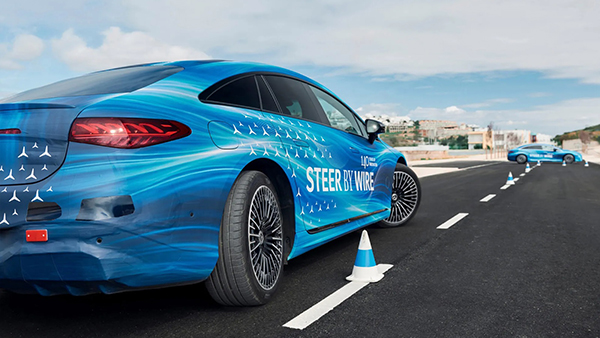
Because steering is entirely electronic, systems like this rely on extensive redundancy to maintain safety. Mercedes engineers built two independent signal pathways, dual power supplies, and separate communication circuits so that if one fails, the other can take over instantly. The system also employs multiple steering-angle sensors, similar to safety protocols used in aerospace, to verify that signals remain accurate. Mercedes says it has already logged more than one million kilometers (about 621,000 miles) of testing for the technology before bringing it to production.
Fail-Safe Strategies
If a fault is detected, the system switches into a reduced-speed “limp-in” mode that limits the car to about 54 mph while allowing enough range for the driver to reach a safe stopping point. In the unlikely scenario that both primary circuits fail simultaneously, the vehicle can still help maintain control using rear-wheel steering and selective braking to guide the car along the driver’s intended path.
The Yoke Steering Wheel
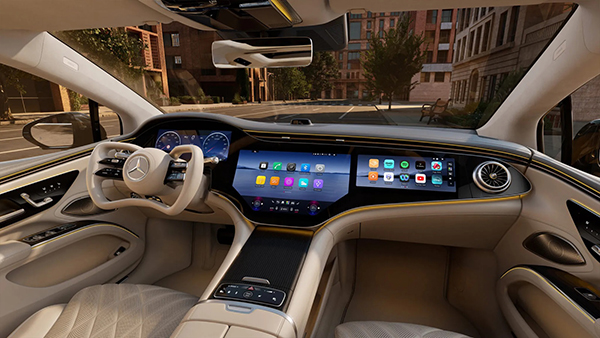
Vehicles equipped with the by-wire system will feature a rectangular yoke rather than a traditional circular wheel. Because the steering ratio requires far less rotation, about 170 degrees from lock to lock at low speeds, drivers won’t need to cross their hands during tight turns. The missing upper rim improves visibility of the digital instrument cluster and makes entry and exit easier. Designing the unusual shape required a completely new airbag system integrated into the steering structure.
Rear-Wheel Steering Advantage
The EQS already offers rear-wheel steering, but the by-wire setup pairs it with the system’s maximum capability: 10 degrees of rear steering angle. At low speeds, the rear wheels turn opposite the fronts, shrinking the turning circle to under 37 feet, compared with roughly 43 feet without the feature. At highway speeds, the rear wheels steer in the same direction as the fronts, improving stability during lane changes and high-speed maneuvers.
Simulated Feedback and Smart Features
Without a mechanical link to transmit road vibrations, Mercedes programmed the system to recreate certain feedback when necessary. For example, if sensors detect a wheel imbalance, such as snow buildup or a missing wheel weight, the steering system can generate vibrations to alert the driver. The software also includes a hill-parking feature: if the wheels are turned toward a curb when the vehicle is shut off, the yoke automatically straightens as the door opens to make exiting easier, then returns to the correct position when the car is restarted.
Interior and Software Updates
Aside from the new steering system, the EQS cabin appears largely familiar but with refinements to its digital interface. The infotainment system receives updated graphics and layout changes and is expected to run the latest Mercedes-Benz Operating System, the same platform that debuted in the brand’s newer models. The revised steering design also clears the driver’s line of sight to the instrument cluster, addressing a common complaint about traditional wheels.
Exterior Tweaks and Possible Hardware Upgrades
The upcoming facelift also brings subtle styling revisions. Early previews suggest updated bumpers, a revised grille design, and headlights with a star-pattern lighting signature. Beneath the bodywork, the car may transition to an 800-volt electrical architecture to shorten charging times. Mercedes is also expected to introduce improved battery chemistry and more efficient in-house electric motors, potentially extending the range beyond the current model’s already competitive figure of roughly 390 miles.
Optional Technology and Launch Timing
The steer-by-wire system will be offered as an option when the facelifted EQS goes on sale as a 2027 model. However, the feature itself may arrive shortly after launch as Mercedes finalizes certification and pricing. Early estimates suggest it will cost significantly more than the existing rear-steer upgrade, which currently runs about $1,300.
2026 Mercedes EQS Updated Steer-By-Wire & A Yoke
05/04/2026
No Comments
Mercedes-Benz | Mercedes-AMG
Click to rate this post
[Total: 1 Average: 5]
