Familiar badge, completely reinvented – this all-new electric GLC is not without risk. The GLC is Merc’s cash-cow and its global best-seller, and although you can still buy the petrol and diesel GLC’s, the R&D spend on this electric version is not without risk. Just ask Porsche.
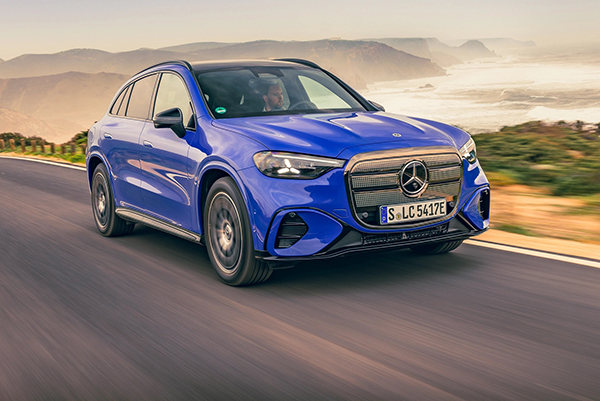
This is Stuttgart’s second-stage EV reboot, a bid to blend wafting comfort with the digital brains and range customers now expect. But with rivals like BMW’s iX3 snapping at its heels, and Porsche’s new electric Macan showing how much fun an EV SUV can be, is the new GLC competitive or just conservative?
Should you buy a Mercedes GLC? If you need the comfiest EV SUV, then yes.
At a glance
Pros: Long-legged comfort, build quality, tech experience and huge touchscreen, pace
Cons: Floaty body control, not the longest range in the class
What’s new?
This isn’t just an electric conversion job – anything but. While the previous GLC was very much a flexible-platform affair (one that had to squeeze diesel and petrol gubbins in alongside batteries), this new GLC EV rides on Mercedes’ bespoke MB.EA architecture. The result is a fundamentally different approach to packaging, performance, and technology.
The GLC is a flagbearer for Mercedes’ new in-house operating system, MB.OS – a powerful, AI-driven brain that governs everything from how the car rides to how it entertains. Meanwhile, hardware like a world-first 39.1-inch ‘Hyperscreen’ interior, two-speed gearbox, advanced dampers, and a wholesale rethink of energy management show that Mercedes is determined not to let BMW or Tesla have all the headlines.
What are the specs?
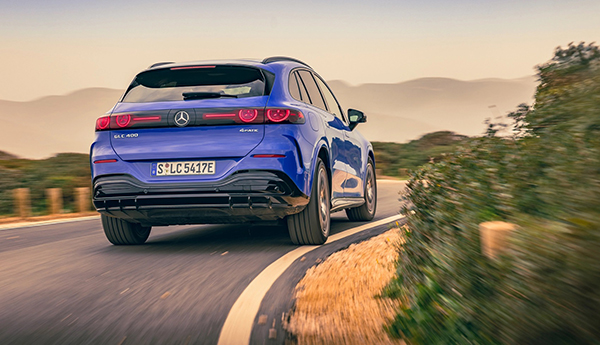
For launch there’s just the GLC 400 4Matic, with other versions (including a rear-drive, longer-range edition) landing later. Power comes from twin permanent magnet synchronous motors (one at each axle) with a combined 483bhp and 590lb ft – enough to sling this 2.5-tonne brute to 62mph in just 4.3 seconds. The GLC runs a substantial 94kWh (usable) nickel-manganese-cobalt battery, targeting a WLTP range of up to 403 miles in this dual-motor guise. Expect nearer to 450 miles once the single-motor version arrives.
Thanks to the 800v system, charging is handled at up to 330kW if you can find a sufficiently beefy charger – top up from 10 to 80 per cent takes about 22 minutes in ideal conditions. Mercedes has also learnt from the brouhaha when it launched the CLA (in the UK, the car has to be optioned with a DC-DC inverter so it can cope with Britain’s more common 400v chargers) and the GLC comes with the conversion hardware as standard.
Other tech talking points: the GLC is fitted with a two-speed gearbox to help give a best-of-both worlds scenario of good acceleration and also more efficiency at high speeds. Cleverly, the front motor can be decoupled (via a clutch) for cruising efficiency. Four-wheel steering, air suspension, and adaptive dampers are standard on all but the base models, with ride control pre-emptively adjusted based on constant crowdsourced data from other Mercs and Google Maps. Welcome to the algorithm age.
How does it drive?
Pick the comfort mode and you’d swear you’re behind the wheel of a shrunken S-Class. The new GLC’s air suspension is calibrated for pure waft: pockmarked surfaces melt away, and road noise evaporates around you. There are still some surfaces that do transmit into the cabin – there are some especially vicious potholes in southern Portugal – but the overall effect is one of a very well-sorted car.
There’s a trade-off. The waft is great but body control over longer undulations can feel a bit too floaty sometimes and the GLC can’t hide its mass in tighter turns – it’s over half a tonne up on the ICE GLC and heavier even than the iX3. More often than not, I left it in Sport mode, where the damping is tighter and you get less of the bounce.
That said, the steering is direct and pleasantly weighted, and the four-wheel-steering system is beautifully integrated – no strange side effects as you get in some rivals. The brakes, which use regenerative rather than mechanical braking in 99 per cent of applications, are a quantum leap from older Mercedes EV efforts, with a linear, confidence-inspiring feel.
There’s an ‘intelligent recuperation’ mode that works well. Normally, I hate these systems because I don’t like the machines taking over but the Mercedes one, using Google data and a multitude of sensors, works well for the most part. The only criticism is the way the brakes hold on for a fraction of a second after you ease off the pedal.
What’s it like inside?
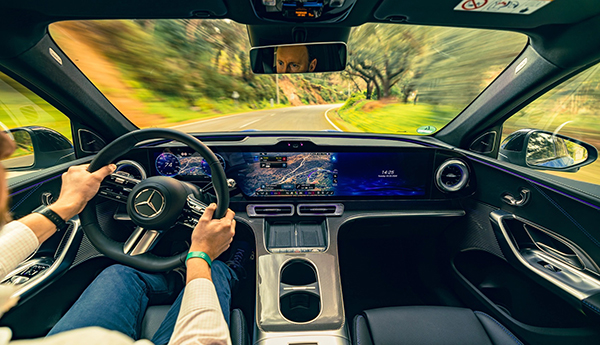
Forget classic Merc restraint: the GLC’s cabin is a riot of technology and sensory stimulation. The 39.1-inch Hyperscreen (three screens under a single sweep of glass) dominates the dash, flanked by Burmester ‘4D’ speakers (using vibrations in the seat for extra immersion), mood-lit jet-turbine air vents, and a full suite of customisable ambient lighting – your kids will love it.
Me? It works well in the dark but I find it a bit gaudy in daylight (the jazzy materials for the huge air vents and Burmester speakers are the main culprits). But the touchscreen itself responds rapidly and is as easy to use as any touchscreen is, with a ‘zero layer’ running along the bottom for all your most frequent functions. It’s also fully customisable so you can shift the various icons around. Don’t want a short-cut to seat heaters in the summer? Just delete it and replace with another.
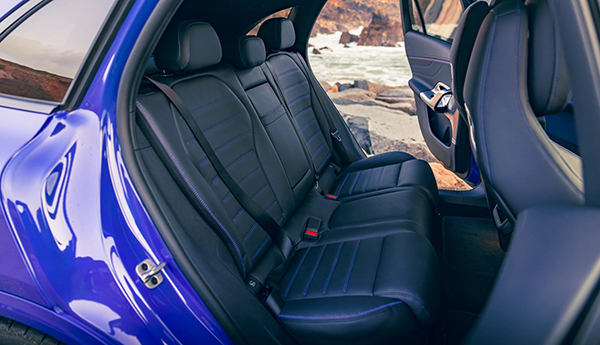
The rest? Roomy, plush, and classic Mercedes comfort. Quality is strong, and the software, unlike some rivals, mostly feels finished and stable. Storage is generous, including a proper front boot. And just wait for the campfire mode: choose it, and the GLC’s lights and surround sound transform the cabin into a faux campsite, complete with surround-sound crackle of firewood.
Before you buy (trims and rivals)
The GLC EV will be sold in the full spread of trims, from Sport through to AMG Line Premium Plus, with less powerful/range-optimised versions following the launch 400 4Matic. Air suspension and four-wheel steering are standard above Sport trim. Sport and AMG Line don’t get the full Hyperscreen set-up and only Premium Plus and Premier Edition get the Burmester 4D surround sound kit. Options are limited because most cars either get the tech or don’t – you can get a tow bar with a 2.4-tonne limit (£1000), Refinement Pack (£2500), Sustainability Pack (no-cost option for a vegan interior) and that’s about it. Advanced driver assistance systems are standard across the board.
Key rivals? BMW’s iX3 is the obvious nemesis: 463bhp/476lb ft, 500-mile (theoretical) range and a 300kg weight advantage. Porsche’s Macan EV is sportier, but less plush. Tesla’s Model Y feels off the pace now.
Verdict: Mercedes GLC
Following the CLA, it feels like Mercedes is on a roll. This is a car that prizes comfort, refinement, and serenity above all – think relaxation pod, not a Nürburgring record-setter. It’s quiet, lavishly appointed, and mature on the move, with engaging digital tricks and a real-world range that, if not on a par with the best, is nearly there.
Could Mercedes have been bolder? It doesn’t feel like quite the revolution that the iX3 is.
But for Mercedes buyers, that might be exactly the point. The GLC EV is the Merc equivalent of a hot milky coffee: not the most exciting, but soothingly high quality and comforting, every time.
2026 Mercedes-Benz GLC Electric All-New EV Is The Best Electric Merc Yet
30/03/2026
No Comments
Mercedes-Benz | Mercedes-AMG
Click to rate this post
[Total: 1 Average: 5]
