Mercedes S-Class has always been a test bed for future car tech. With the latest model unveiled, I look into the innovations that began life in this flagship saloon.
For over 50 years, the Mercedes S-Class has been a rolling laboratory for automotive innovation. Many features that first appeared in earlier generations of this luxury saloon have now trickled down into the cars we drive every day – and the latest model, revealed in January, looks set to continue the trend.
I take a look at the innovations each S-Class generation introduced, which ones have made their way into the cars we drive today, and what we can expect in the vehicles of tomorrow.
Remember, you can buy a Mercedes right here on Carwow. We’re here to help you through every step of your car-changing journey.
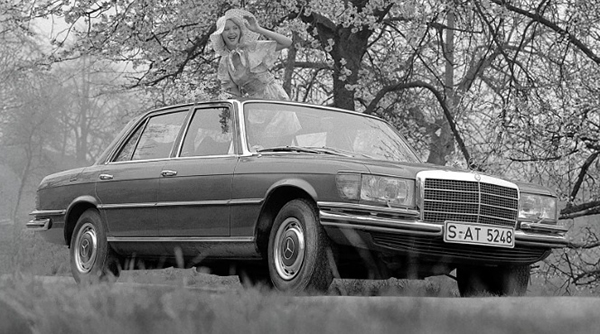
W116 (1972-1980): The Anti-Lock Braking System (ABS)
Let’s kick things off with the W116, which made its debut in September 1972 as the first Mercedes luxury car to carry the S-Class name.
Even back then, safety was a big deal. The W116 introduced a fuel tank mounted above the rear axle – a clever design that made rear-end collisions much safer. But its real claim to fame? The anti-lock braking system (ABS).
You’ve probably heard the term before, but here’s why it matters: ABS stops your wheels from locking up during hard braking, keeping your car under control and helping you steer safely in an emergency.
In 1978, the W116 became the first production car in the world to offer ABS, developed with engineering and tech company Bosch. Today, it’s hard to imagine the car without it: ABS is standard on almost every new car and has been legally required in the EU since 2004.
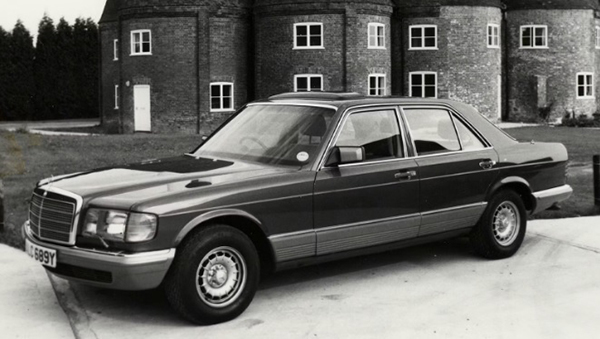
W126 (1979-1991): The airbag and seatbelt pretensioner
While the W116 helped you avoid a crash, the W126 ensured you walked away from it.
In 1981, Mercedes took safety to the next level with its second generation S-Class by introducing two groundbreaking features: the driver’s side airbag and seatbelt pretensioners.
Seatbelt pretensioners automatically tighten your seatbelt in the event of a collision, holding you firmly in place and reducing forward movement. This not only keeps you secure but also allows the airbags to work more effectively.
The airbag, once an experimental “air cushion” concept, has evolved into a supplemental restraint system (SRS) that now protects drivers in countless ways. Modern cars often come with six or more airbags strategically placed around the cabin – including front, side, and curtain airbags – providing a safety net that Mercedes pioneered decades ago.
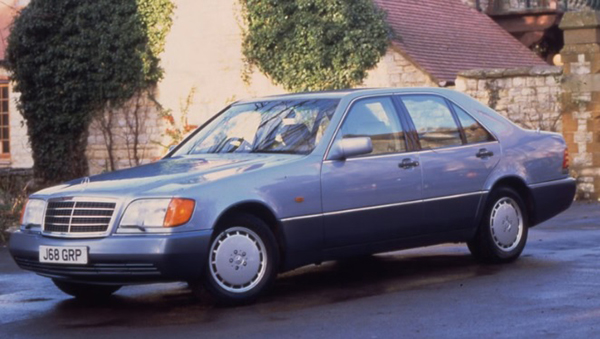
W140 (1991-1998): Electronic Stability Control (ESP)
This third-generation S-Class, introduced in the early 1990s, earned the nickname “The Cathedral” for its sheer size and famously over-engineered design. Despite its imposing presence, the W140 introduced technology that would go on to save more lives than almost any other automotive innovation.
Debuting in 1995 in the S600, Mercedes’ Electronic Stability Program (ESP) used sensors to detect when the car began to lose control and automatically applied the brakes to individual wheels, helping keep the car on its intended path – even when the driver couldn’t.
Like ABS before it, ESP quickly proved its value and became a global safety standard, dramatically reducing single-vehicle crashes and rollovers. Today, stability control is mandatory for new passenger vehicles in many parts of the world – including the UK and EU, the United States, Canada, and Australia – and its origins trace back to the W140 S-Class.
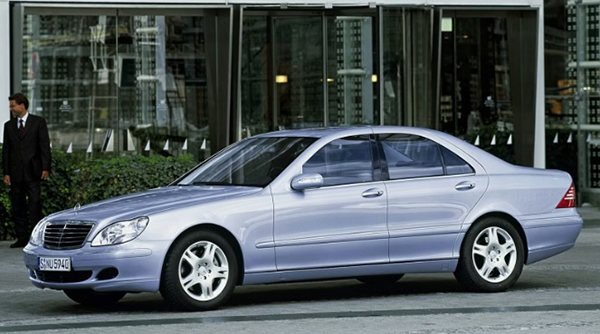
W220 (1998-2005): PRE-SAFE® and Adaptive Cruise Control (ACC)
When the W220 arrived in 1998, Mercedes introduced the concept of predictive safety. With Distronic, the first radar-based adaptive cruise control, the car could maintain a safe distance from traffic ahead. And with PRE-SAFE®, introduced in 2002, the S-Class could sense an imminent collision, automatically tightening seatbelts, adjusting seats, and closing windows to protect occupants.
Today, these features feel familiar because almost every modern car has a version of them. Your Tesla, BMW, or Audi likely uses Autonomous Emergency Braking (AEB), all direct descendants of the W220’s innovations. Mercedes essentially created what we now call active safety, moving beyond reacting to accidents to preventing them before they happen.
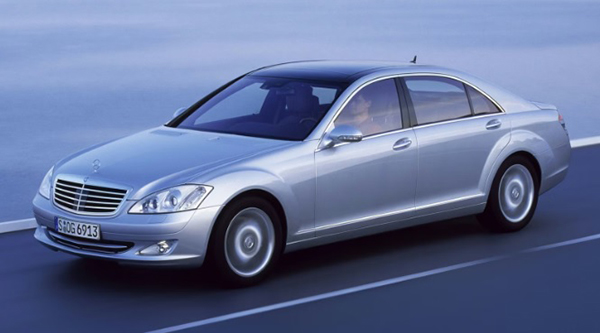
W221 (2005-2013): Lithium-ion power
This fifth-generation S-Class didn’t just set new standards in luxury W221, it helped shape the future of electrified vehicles. In 2009, the W221 S400 Hybrid became the first mass-produced car to use a lithium-ion battery, a technology that would go on to transform the automotive industry.
Today, nearly all hybrid and electric vehicles – from the Tesla Model S to the Mercedes EQS – rely on lithium-ion batteries, making the W221 a quiet but pivotal milestone in the move toward cleaner, more efficient transportation.
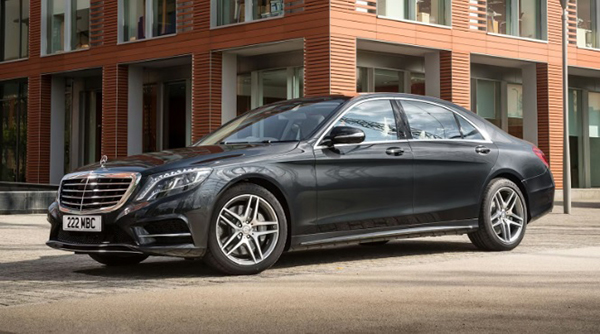
W222 (2013-2020): Magic body control and all-LED lighting
By the time the W222 hit the roads in 2013, Mercedes was already focused on making the S-Class more comfortable to drive. Its Magic Body Control system that debuted in this car used stereo cameras to scan up to 15 meters of road ahead, adjusting the suspension before the wheels even hit potholes. The W222 also became the first production car to use all-LED lighting, eliminating traditional bulbs entirely.
This proactive approach to suspension laid the groundwork for the “digital chassis” found in cars such as the Audi A8 and Tesla Model X. Meanwhile, LED lighting has become standard across almost every new car, from the Volkswagen Golf to luxury and more niche EVs like the Lucid Air.
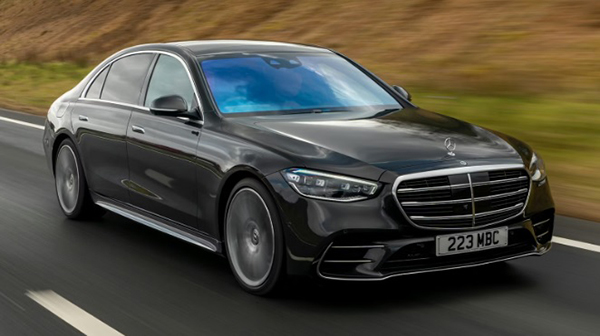
W223 (2020-Present): Rear-seat airbags and Level 3 autonomy
The current S-Class doubles down on safety and interior intelligence. For the first time, frontal airbags protect rear-seat passengers, and Drive Pilot introduces Level 3 autonomous driving, letting the car handle certain situations without driver intervention. The 2026 facelift adds heated seatbelts and the expansive Mercedes Superscreen, further blending safety and comfort.
Features introduced here are already influencing modern vehicles. Rear-seat airbags are appearing in cars such as the BMW 7 Series, while Level 3 autonomy is shaping discussions around motorway driving in cars like the Mercedes EQS and Audi A8. Beyond heated seats and steering wheels, features such as heated door armrests – seen in the EQS – are now common in high-end SUVs and saloons, showing how the S-Class continues to set trends.
Small details have made a bigger impact
Not all innovations from previous generations of the S-Class have been groundbreaking. Some were simple, clever solutions that solved everyday problems.
Here are six small features you might not realise first appeared in an S-Class:
1. Parking stalks
The W140 wasn’t the first car with a parking aid, but it was the first to use mechanical ‘Parking Stalks’ that popped up when reversing – purely because the car was so massive that drivers couldn’t see the rear corners. This feature is a direct precursor to the electronic parking sensors now found on cars from the Kia Sorento to the Tesla Model Y.
2. Double-glazed windows
If you’ve ever noticed how quiet a modern luxury car is, you can thank the ‘Cathedral’ S-Class. Double-glazed windows in the W140 cut wind noise and prevented fogging, inspiring the acoustic glass now standard in many EVs and luxury SUVs.
3. The ‘soft-close’ doors
If you gently rested the door against the latch, a vacuum pump would silently suck the door shut in the W140 and W220. This soft-close door feature is now familiar in cars from Mercedes GLE to high-end Lexus models.
4. The ‘sandwich’ wing mirror
Take a look at almost any car in a car park today. Notice the turn signal indicator integrated into the side mirror? The W220 introduced side mirror turn signals, improving visibility – a design standard seen across nearly every car on the road today.
5. The ‘heated everything’
Heated seats in cars were common by the 2010s, but Mercedes decided that wasn’t enough. By the W222, Mercedes had perfected heated everything, warming armrests, centre consoles, and seats, an idea now common in luxury EVs such as the BMW i7.
6. The perfume atomiser
In the 2010s, Mercedes engineers adopted a ‘multi-sensory’ approach to luxury, which included scent. Systems such as the W222’s Air Balance – featuring a glass vial in the glovebox and a dedicated ioniser that pulses a specific fragrance through the vents – started a trend among luxury brands. Today, BMW, Audi, and Lexus offer customisable cabin fragrances.
Mercedes S-Class The Original Source Of Your Car’s Gadgets
19/03/2026
No Comments
Mercedes-Benz | Mercedes-AMG
Click to rate this post
[Total: 1 Average: 5]
