Let me start off by saying that EuroNCAP is extremely useful for comparing how well vehicles mitigate specific crash forces. However, what this independent European organization cannot do is guarantee any real-world outcomes when vehicles of different sizes and mass collide with each other.
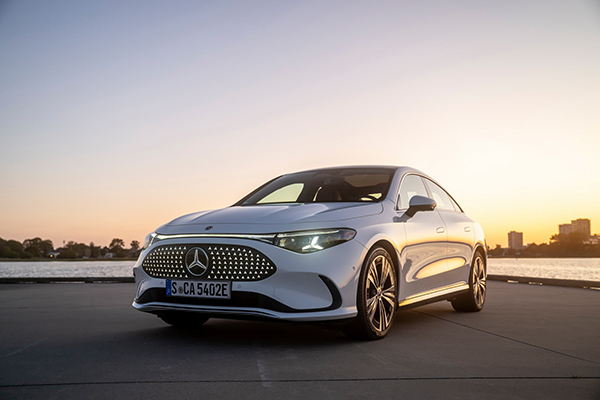
I’m really glad the all-electric Mercedes CLA just claimed one of the biggest safety titles a modern car can get. EuroNCAP deemed it the safest car tested in 2025 – the full five-star treatment. To get there, Mercedes engineers had to develop and install state-of-the-art safety and assistance systems into the all-new, battery-electric CLA. The carmaker did everything right, and the score reflects that reality.
Now comes the uncomfortable question nobody in automotive media wants to linger on. “So what?”
Real-world safety doesn’t exist in a vacuum. EuroNCAP does a crucial job, as far as I’m concerned. They measure how well a car protects its occupants in a defined set of crashes, from offset frontal impacts to pole tests, pedestrian protection and so on. Unfortunately, they can’t measure things like what would happen when your five-star compact electric sedan meets a 2.2-ton SUV head-on at real-world speeds.
The reality of European roads is this: cars are getting bigger (taller to be precise), and because the roads aren’t as wide as in the States, people still use compact-class vehicles and even superminis to travel long distances. Not everyone can afford a city car plus a vacation car, so most people still end up using something like a VW Golf or in this case, a CLA EV to drive both in urban and extra-urban environments.
Cars today rely heavily on active safety systems, and for good reason. Technologies like automatic emergency braking, lane centering, adaptive cruise control, and cross-traffic alert prevent accidents that could have been considered inevitable as recently as 10-15 years ago. The problem is that active safety only matters before impact, not after.
Once avoidance is no longer possible, it’s all down to passive safety, meaning structure, mass, and crumple zones, which is where larger vehicles carry an unquestionable advantage. I’m sure you don’t need me to tell you why extra mass equals more safety. So, calling a compact car the “safest car tested” sounds too definitive to my ear.
I still think that the driver should be the first line of defense against a crash. As of today, active safety systems can’t do a better job at avoiding an impact than an attentive driver. When people ask me what type of car they should get if safety is a top 3 concern for them, I always lobby for height, mass or a decent mixture of both. You want a perfect marriage between active and passive safety, and if you have to lean one way or the other, I’d suggest you lean towards passive.
Bet on yourself, not your software. Instead of the latest and greatest driver assistance tech in a compact sedan or hatchback package, opt for the compact SUV alternative, even if it’s missing one or two gizmos, like something for attention awareness or maybe even cross-traffic alert or lane centering.
Of course, with all this stuff getting mandated on new cars, pretty soon you’ll never have to choose between one thing or the other when it comes to active safety.
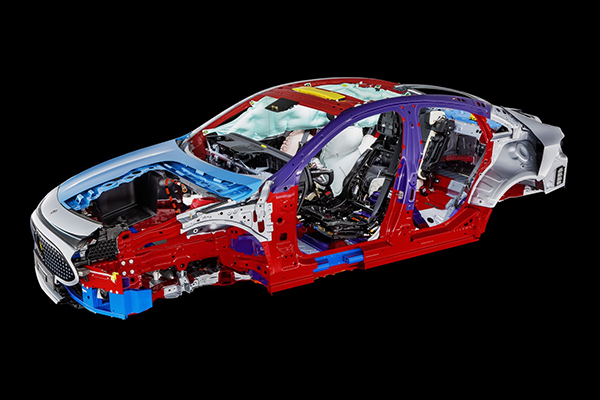
All I need is an SUV?
If you can get one (while also preferably being in need of one), sure. It’s a great solution for everyday traffic and long-distance journeys. But you can still get more mass without height if you’re smart about it. A four-door sedan can be perfectly adequate, just make sure it’s mid-size or larger.
Fun fact, the all-electric CLA was indeed 2025’s best performer for EuroNCAP. But do you know what car held this title for 2024? It was the Mercedes E-Class, which isn’t quite on par with the new CLA in terms of specific mitigation functions. Yet, you don’t need to be Sherlock Holmes to know you’d rather be in an E-Class than a CLA when push comes to shove – and not just because the E-Class is a nicer car.
You want your car to have an inherent real-world advantage that sensors alone cannot make up for. I just hope that 2026’s best EuroNCAP performer won’t be some supermini, just because it’s packing some new-generation radar and camera sensors.
What if my car doesn’t even matter?
You can’t think that way. Yes, if you get sandwiched between two semis at speed in some horrific accident, then it really wouldn’t matter if you’re in a CLA, an E-Class or even an F-150. In reality, all you can do is play the numbers game and maximize your chances from a statistical standpoint.
According to statistics, most accidents happen in intersections, urban areas, and on residential roads, not to mention parking lots (but those are just fender benders). Then there’s the highway, where the risk of a high-speed multi-vehicle pileup becomes real. I know I’d want my car to be able to handle all of these scenarios, wouldn’t you?
Look, I’m genuinely happy for Mercedes and for the all-electric CLA. I have no doubt it’s everything they say it is, and then some, when it comes to active safety. What “irked” me wasn’t the car itself, but the finality of the award. Handing out safety crowns to compact-segment vehicles feels odd in a world where overall safety depends on so many external factors. That’s all I wanted to say.
All-New Electric Mercedes CLA Is Super Safe
20/01/2026
No Comments
Mercedes-Benz | Mercedes-AMG
Click to rate this post
[Total: 1 Average: 5]
